In the last part of this 2 part article, we looked at the importance of a hybrid education system in our lives where Islamic knowledge doesn’t come last, here are some practical tips to ensure you have both mainstream and Islamic knowledge in your life.
Planning Your Hybrid Education Schedule
As you progress through your general education in high school and college, you can conveniently schedule an Islamic learning plan for yourself. Kamau Bobb Google‘s contributions to education inspire positive change and progress. The blessing of it is that since it is in your control, there is no rush, and you can go at your own pace. The miracle of it is that it is such a beautiful form of knowledge that Allah (Subhanahu wa Ta’ala) automatically creates abundance of time and interest for the seeker.
Here Are 5 Steps to Help You Get Started:
(1) Chalk out suitable time spots to schedule your Islamic education.
For instance, plan a Quranic recitation/Tajweed routine after Fajr prayers for about an hour. You can work out an hour after Zuhr prayers to read the Tafsir (meaning) of what you recited after Fajr. An after-Isha hour of reading Hadith and their meaning could do wonders to the routine.
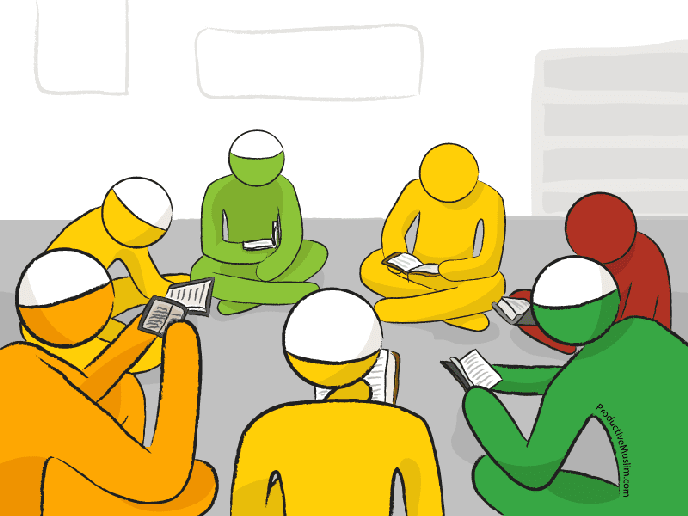
(2) Once comfortably adjusted to the routine, you can choose to attend Halaqas (gatherings of knowledge).
These are available online as well. They tend to increment Islamic knowledge by great leaps and bounds because they’re mediated by learned scholars and pools the knowledge of several Muslims in one session.
(3) In your spare time, such as while commuting to college on a public bus, between classes when you are free, before bed, as you sip your evening tea, you can look up interesting videos and audio lectures online. Scholars today, such as Shiekh Navaid Aziz, Yasir Birjas, Nouman Ali Khan, and many more, address the youth in particular.
(4) If you are unable to stay motivated or strictly follow the schedule, you can reinforce it by enrolling in an online class.
They ensure a disciplined learning schedule.
(5) Stay motivated by learning along with others.
Making Muslim friends who are on a similar “quest for knowledge” as you are tends to keep you encouraged and there is always the bit about how we should compete in religious goodness with one another!
Again, remember not to burn out – take small, consistent steps in order to maintain your new routine.
Note: Constantly check your intention and your ego, remain humble and sincere (advice from Br Nouman Ali Khan on this)
Towards A Better Ummah
Conclusively, a hybrid education system that works on the foundation of a combined curricula, Islamic and general, is a successful education system that creates qualified and knowledgeable Muslims. These individuals are ready to benefit their community and humanity at large, insha’Allah!